
- Blog
Yalla, Khalas, Habibi – the Gulf Arabic Words You Hear Every Day in Dubai
- 6 min read
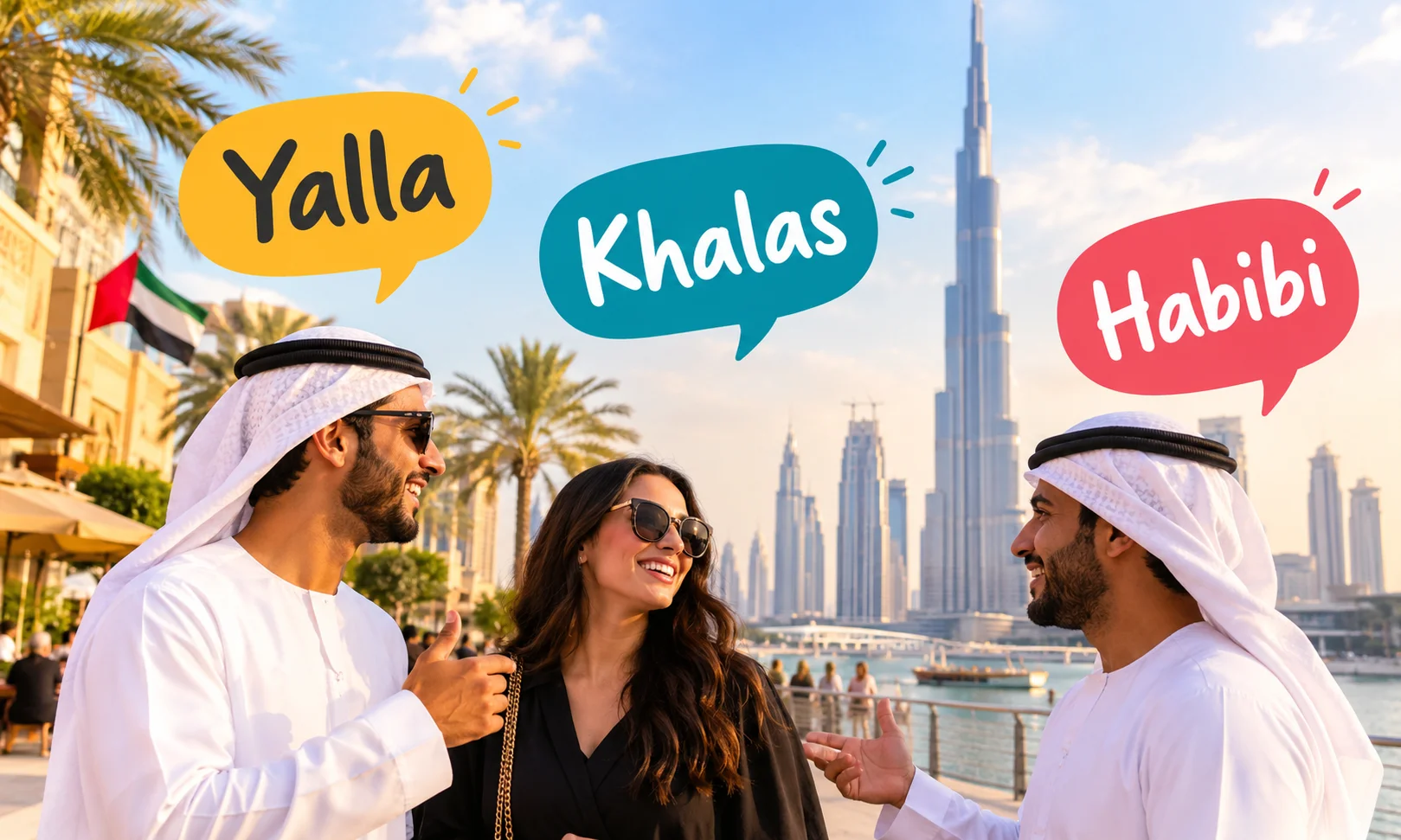
Live in Dubai for even a week and you’ll start noticing the same handful of Arabic words popping up everywhere – in traffic, in the office, at the coffee shop, in WhatsApp voice notes. They’re not exactly “lessons” you’d find in a formal textbook, but they’re the words that actually run daily life in the city. Learn these, and you’ll suddenly understand half the conversations happening around you – and maybe even drop a few yourself.
Here’s your crash course in the Gulf Arabic you’ll hear constantly in Dubai, whether you’re ordering shawarma, stuck in Sheikh Zayed Road traffic, or chatting with a colleague.
Yalla – “Let’s Go” / “Come On”
If there’s one word that sums up the energy of Dubai, it’s yalla. Technically it means “let’s go” or “hurry up,” but in practice, it’s used for basically everything. Your taxi driver will say it when traffic finally clears. Your friend will text it when you’re running late. Your colleague will say it to wrap up a meeting.
You’ll also hear it stretched out as yalla yalla when someone wants to speed things up, or softened into yalla bye when ending a phone call – which, honestly, might be one of the most Dubai phrases that exists. It’s casual, it’s quick, and once you start using it, it’s genuinely hard to stop.
Khalas – “Enough” / “Done” / “That’s It”
Khalas is another word you’ll hear multiple times a day, and its meaning shifts slightly depending on tone and context. It can mean “stop,” “that’s enough,” “it’s finished,” or simply “okay, done deal.”
Say it firmly and it means “enough already.” Say it casually at the end of a transaction – like after agreeing on a taxi fare or finishing a work task – and it just means “alright, that’s settled.” You’ll hear shopkeepers say it after bagging your order, or friends say it when a discussion has reached its natural end. It’s one of those words that does a lot of heavy lifting with very little effort.
Habibi – “My Love” / “Dear” / “Buddy”
Habibi (said to a man) and habibti (said to a woman) literally translate to “my love” or “my darling,” but don’t read too much into it – in everyday Gulf Arabic, it’s used far more casually than that. It’s closer to how people use “mate,” “buddy,” or “dear” in English. Shop owners use it with customers, friends use it with each other, and even strangers use it in friendly small talk.
It can also carry real affection, of course – parents call their kids habibi all the time – but context tells you which version you’re getting. In Dubai’s fast, friendly service culture, you’ll hear it constantly, and it rarely means anything deeper than warmth and friendliness.
A Few More You’ll Pick Up Fast
Beyond the big three, a handful of other words show up constantly once you start listening for them:
Inshallah – “God willing.” Used anytime someone talks about future plans, from “I’ll see you tomorrow, inshallah” to confirming a delivery date. It carries a sense of hopeful uncertainty that English doesn’t really have a single-word equivalent for.
Mashallah – An expression of admiration or appreciation, often said when complimenting something – a new car, a baby, good news – partly as a way of warding off bad luck while praising it.
Wallah – Literally “I swear to God,” used the way English speakers might say “seriously” or “I promise, for real.”
Shukran – “Thank you.” Simple, universal, and one of the first words most newcomers to Dubai pick up.
Why These Words Matter More Than Formal Vocabulary
If you’ve ever studied Arabic from a textbook, you’ll notice none of these words get much attention – they’re too casual, too regional, too “street” for formal lessons. But that’s exactly why they matter. These are the words that make up real, everyday Gulf Arabic, the kind spoken in homes, markets, and offices across the UAE.
Learning them doesn’t require memorizing grammar rules. It just requires listening, noticing patterns, and trying them out. Drop a “yalla” into conversation at the right moment, and people notice – not because it’s impressive, but because it shows you’re actually paying attention to how people around you talk.
How to Start Using Them Naturally
Don’t try to force all five words into one sentence on day one. Start with yalla – it’s the easiest to slip into casual conversation, whether you’re leaving a café with a friend or wrapping up a call. Once that feels natural, add khalas for everyday situations where something’s finished or settled. Habibi comes last, mostly because tone matters more with this one, so it helps to hear it used a few times before trying it yourself.
The best way to build this vocabulary isn’t memorization – it’s exposure. Watch how people around you use these words, notice the tone, and mimic it. Within a few weeks of living in or visiting Dubai, most of these will start coming out of your mouth without even thinking about it.
Wrapping Up
Yalla, khalas, and habibi aren’t just slang – they’re the connective tissue of daily conversation across the Gulf. They show up in offices, taxis, shops, and group chats, and once you understand them, so much more of everyday life in Dubai starts to click into place. Start small, listen closely, and don’t be afraid to use them – that’s exactly how everyone else learned too.
FAQ
Q: What does “yalla” mean in Arabic?
A: Yalla means “let’s go” or “come on,” and it’s used constantly in everyday Gulf Arabic to express urgency, encouragement, or simply to wrap something up, like ending a phone call with “yalla bye.”
Q: Is “habibi” only used romantically?
A: No. While habibi literally means “my love,” in everyday Gulf Arabic it’s used casually among friends, colleagues, and even by shopkeepers with customers, similar to how “buddy” or “dear” is used in English.
Q: What’s the difference between “khalas” and “yalla”?
A: Yalla means “let’s go” or “hurry up,” while khalas means “enough” or “done” – used when something is finished, settled, or needs to stop.
Q: Are these words used across the whole Arab world or just in the Gulf?
A: Yalla and habibi are widely understood across most Arab countries, while khalas and the exact tone/usage patterns described here are especially common in Gulf Arabic, including the UAE.
Recent posts


You may also like

- Blog
- 9 min read
Most offices in Dubai run on English. Emails, reports, and

- Blog
- 14–16 min read
Arabic dialects differ mainly in pronunciation, vocabulary, grammar and everyday

- Blog
- 13–15 min read
To become conversational in Arabic faster, practice the way memory